AI is eating the world, but where is the value created?
How is all this investment in AI actually creating value?
The million-dollar question. (Or more accurately… the $400B question.)
And when Benedict Evans weighs in, I for sure listen.
His latest presentation dropped last week. No surprise on the theme (AI, of course), but the analysis of the end game really made me think.
Here are the pieces that hit me the most:
The big players are burning billions, and the AI industry is projected to hit $3 trillion. (My brain can’t even picture that number.)
To finance it all, capex is exploding. Hyperscale or bust.
Most of the money? Going into data centers, chips, power.
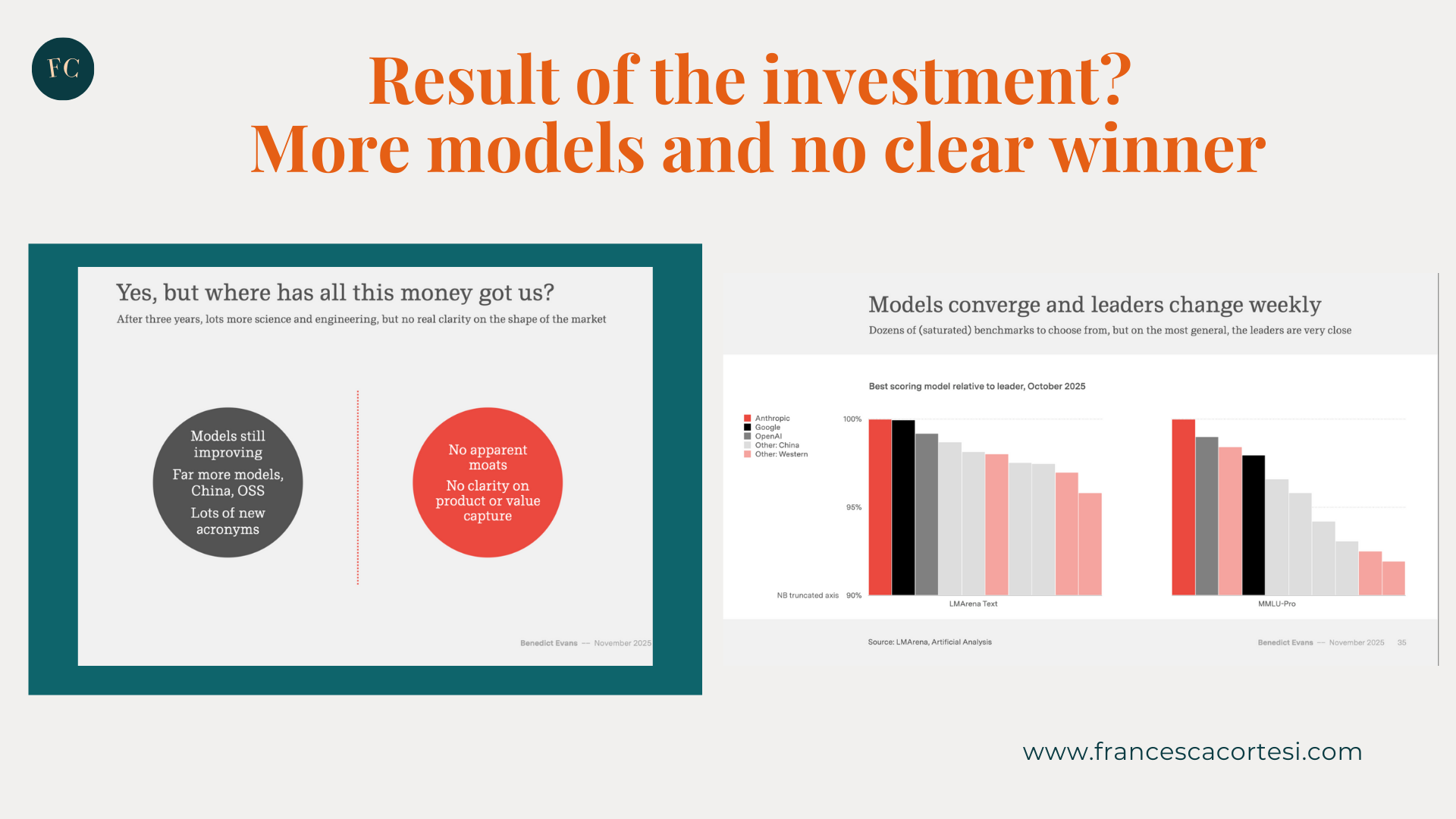
And what’s the value generated so far? Models. Lots and lots of models.
No clear winner. No clear dominant use case. No clear moat.
With models becoming commodities (research heavy, capital intense commodities) the real question is: where will the value actually come from?
And here is when the most interesting part of the presentation come up:
What if AI isn’t “the new tool”… but an entirely new industry?
Which one?
Not AGI-for-humanity (ain’t nobody caring about that anymore). Not pure productivity (the money pot is not big enough).
But the next evolution of… 🥁🥁🥁🥁 advertising.
Think about it:
These companies already make billions through distribution power + data dominance.
What if the end game is shifting from “correlation” to “context”?
Instead of:
“You bought packing tape → you may need bubble wrap”
It becomes:
“You’re moving → here’s everything you need, across products and services.”
A hyper-personalized, context-aware advertising infrastructure. To be sold over and over.
Honestly… it sounds like a Black Mirror episode, and it’s the most on-point analysis I’ve seen.
I put together the key slides from Evans presentation in the carousel, and if you want to go deeper:
Here is Benedict Evans full presentation
My thoughts on the behavioral shifts driving AI distribution disruption
What to think about when building AI products
If this analysis made you stop and think, I’m with you. What’s your take on the end game?





Confidence isn’t something you have or don’t have.
It’s something you build.
In this episode Francesca and Parveen Downer explores how small actions, preparation, and discomfort help you grow it.